Bedding · Fiber care
How St Geneve’s Twill-Weave Bedding Balances Drape and Warmth
A blanket can be warm without feeling weighty, soft without seeming limp, and beautifully made without being especially forgiving of the washing machine. In cashmere bedding, those qualities meet in the interaction between fiber, weave, and care. St Geneve’s Santa Lucia cashmere blanket offers a useful case study in how a diagonal twill construction shapes a textile’s hand and fall—and what a buyer should consider before bringing one home.
Published November 13, 2026
Cashmere is often introduced to the imagination by touch: a sleeve against the wrist, a scarf folded at the throat, the promise of warmth that does not arrive with the bulk of a heavy coat. A cashmere blanket extends that promise across a larger scale. Yet the experience of a blanket is not determined by fiber alone. How the yarns cross, how closely they are set, and how the finished textile is handled all help decide whether it falls in soft folds, holds a crisp outline, or settles into a quiet layer of warmth.
St Geneve’s Santa Lucia Cashmere Blanket is described as 100 percent cashmere, woven in a diagonal twill and finished with a fluid drape. The cashmere is sourced from China, while the blanket is woven in Lithuania. Its care instructions specify dry cleaning. These facts do not tell us everything about the blanket’s feel or performance—weight, yarn size, and precise density are not listed—but they offer a sound starting point for understanding the relationship between material and construction.
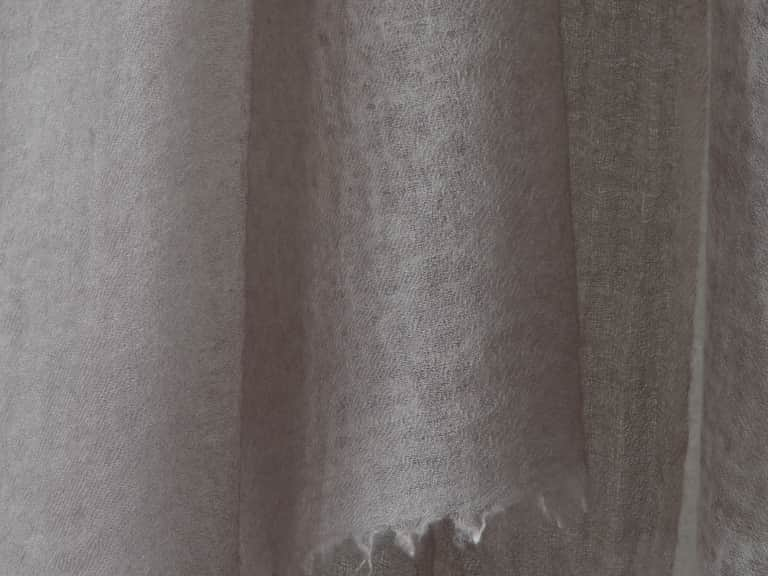
Twill is a familiar weave with a characteristic diagonal surface. The pattern is made by passing one yarn over and under others in a sequence that shifts from row to row. In a plain weave, the crossings alternate in a close, regular grid; in twill, the staggered interlacing creates diagonal lines. The result can be a fabric that bends and hangs differently from a comparatively firm plain weave. The precise effect depends on the yarn and the particular weave, but a twill often gives a textile a supple hand and a graceful fall.
That supple quality matters in a blanket. A textile that drapes readily can settle over a bed or across the shoulders rather than hovering stiffly above the surface. It may also fold into a more compact shape for storage. Drape is not simply a synonym for softness: a fabric can feel soft while still having a firm structure, and it can be flexible without feeling especially plush. The terms describe different sensations, which is why a product description is most useful when read as a set of clues, not a complete substitute for handling the item.
What the diagonal contributes
The diagonal ribs of twill give the surface a subtle direction. Depending on the yarn and how the cloth is finished, that direction may be visible only at close range or more apparent across the whole piece. It is a structural feature rather than an applied decoration: the pattern comes from the way the threads interlace. On a cashmere blanket, the weave can lend visual texture without relying on a raised ornament or a contrasting color.
There is a practical dimension, too. A fabric’s ability to bend and conform affects how it behaves when laid over another surface. A fluid blanket can follow the contours of a bed or chair and make a relaxed layer rather than a rigid panel. It can also feel less imposing when used as an occasional wrap. These are qualities to consider alongside dimensions and weight, which tell a different part of the story. Santa Lucia is listed as a blanket made from 100 percent cashmere, but no blanket dimensions or weight are supplied in the available description. Anyone comparing sizes should check the current product specifications before deciding how it will fit a particular bed or use.
It is tempting to treat twill as a guarantee of a certain level of warmth, but that would give the weave too much credit. Warmth depends on several interacting factors: fiber properties, yarn structure, fabric density, thickness, and the surrounding conditions. The diagonal construction influences hand and drape; it does not, by itself, establish how insulating a particular blanket will be. A lightweight cashmere textile can feel warm for its weight, but the exact experience varies with the finished cloth and the person using it.
That distinction is useful when reading luxury bedding language. “Lightweight,” “warm,” and “breathable” are not standardized measures. They describe intended qualities, but they do not replace practical details such as dimensions, composition, weave, and care. The shopper’s task is not to decode poetry as though it were a laboratory report. It is to connect the descriptive claims to the information that can be checked.
Cashmere: warmth without a heavy hand
Cashmere is a fine animal fiber valued for its softness and insulating character. In a blanket, it offers a way to add warmth without necessarily adding the weight associated with a thick, densely filled covering. The word “cashmere,” however, does not by itself tell a buyer how soft a specific textile will feel, how substantial it is, or how it will age. Those outcomes depend on the quality and preparation of the fiber, the yarn, the weave, and the finishing process.
Santa Lucia’s stated composition—100 percent cashmere—is important because it identifies the principal fiber without an undisclosed blend. That is different from a product described as cashmere-soft, where the phrase may refer to a sensation rather than the fiber content. Checking the material line is therefore more reliable than relying on a product name or an evocative adjective. For anyone comparing a cashmere blanket with an alpaca, wool, or cotton option, composition provides the first firm point of comparison.
Fiber descriptions should still be read with care. Terms such as “hypoallergenic” are sometimes used broadly in textile marketing, but individual sensitivities vary. Natural fibers can be comfortable for many people and still not suit everyone. If a household member has a known sensitivity, it is sensible to consider the actual fiber content and any finishing information, and to consult a qualified health professional when the concern is medical. A luxurious hand is not a substitute for personal tolerability.
Cashmere also has a reputation that can encourage overconfidence. It is a natural fiber, not a care-free one. A blanket may be soft and insulating while requiring more deliberate maintenance than a washable cotton throw. In that sense, its appeal is partly a question of routine: whether the owner is comfortable protecting it from unnecessary soil and following the care label when cleaning becomes necessary.
Reading care instructions before buying
For Santa Lucia, the stated instruction is dry clean only. That is not a decorative footnote; it is part of the blanket’s practical identity. A household that wants to wash every bedding layer at home may find this requirement inconvenient. Another household may regard occasional professional cleaning as a reasonable exchange for a fine cashmere textile. Neither response is more correct. The point is to make the decision before the blanket is in use, rather than after a spill has turned a quiet evening into a search for emergency advice.
Until professional cleaning is needed, thoughtful handling can help limit avoidable wear. Keep the blanket away from food and drink when possible, and avoid using it in situations where it is likely to become heavily soiled. Follow the care label rather than applying a familiar routine from cotton or synthetic bedding. In particular, do not assume that a gentle machine cycle, a hand wash, or a home steamer is appropriate simply because the fabric feels delicate. Cleaning methods that work for one fiber or construction can cause shrinkage, distortion, or changes in surface texture in another.
Between uses, allow the textile to air in a clean, dry place if it needs refreshing, and store it only when fully dry. For longer-term storage, a clean, breathable enclosure is generally preferable to trapping a natural-fiber textile in damp conditions. Keep it protected from direct sunlight and from pests, and avoid compressing it so tightly that folds are forced into the same places for months. These are sensible general precautions, not a replacement for manufacturer-specific instructions.
Care labels can also clarify the difference between a blanket meant for frequent everyday laundering and one intended for more considered use. A machine-washable cotton blanket may be easier to manage in a busy household, while a dry-clean-only cashmere blanket may suit a bed, reading chair, or sitting room where it is less exposed to daily spills. Asking how the textile will actually be used is often more useful than asking which material is “best.”
A comparison is more than a softness contest
When comparing cashmere bedding, begin with fiber composition, then consider construction and care. A product page that states the fiber, weave, origin, dimensions, and cleaning method makes a more useful comparison possible than a page built mainly around adjectives. For a blanket, the questions are straightforward: Is it pure cashmere or a blend? Is the weave specified? What are its dimensions? Is it intended as a decorative layer, a warmth layer, or both? Can it be cleaned at home?
Weave names can help, but they are not complete performance ratings. Twill tells us something about the arrangement of yarns and the resulting diagonal character; it does not reveal every detail of density, thickness, or finishing. Two twill fabrics can feel quite different because their yarns and construction differ. When those details are not available, it is better to acknowledge the uncertainty than to infer a precise level of insulation or durability from the weave name alone.
Weight is another useful comparison point when it is provided. A lighter blanket may be easier to drape or fold, while a heavier one may feel more substantial. But weight alone does not tell the whole story either: fiber, air held within the textile, and the weave all influence the sensation of warmth. A carefully specified product description helps; a retailer who can answer questions about dimensions and construction may help more.
Color and finish belong in the decision, but they are secondary to use and care. A quiet neutral may be easy to layer with other bedding; a richer shade may make the blanket a visible feature of the room. In either case, the relevant questions are whether the color works in the space and whether the owner is prepared to maintain the textile as directed. An attractive blanket is at its best when it is used in a way that does not constantly put it at risk.
The place of a cashmere blanket in a home
A luxury blanket need not be reserved for a room no one enters. Its purpose is comfort, and its value is partly realized through use. Still, the kind of use matters. A cashmere blanket can serve as a light layer over bedding, a wrap during a cool evening, or a considered accent folded at the end of a bed. A dry-clean-only label makes it less suited to some households’ everyday routines, particularly where children, pets, meals, and frequent laundering converge.
In a nursery, the distinction between a decorative textile and a sleep product becomes especially important. A blanket is not automatically appropriate for an infant’s sleep space because it is soft, natural, or breathable. Follow current safe-sleep guidance from qualified health authorities: loose blankets and other soft bedding should not be placed in an infant’s sleep area. A cashmere blanket may be enjoyed by adults as a room layer or kept for supervised use as appropriate, but it should not be treated as a substitute for a safe, uncluttered infant sleep surface.
This caution does not diminish the appeal of fine textiles. It places them in the right context. Materials can make a room feel calm and comfortable, but safety depends on how and where a product is used, not simply on what it is made from. Parents and caregivers should distinguish product marketing from safety guidance, and check current recommendations for the child’s age and sleep arrangement.
For adult bedding, too, comfort is personal. Some people prefer the close, familiar weight of a dense quilt; others want an airy layer that can be moved easily. A twill-woven cashmere blanket is appealing when the priorities are a soft natural fiber, a fluid drape, and warmth without a notably heavy feel. It may be less appealing to someone whose first requirement is effortless machine washing.
A measured verdict on Santa Lucia
The Santa Lucia blanket’s description is concise but specific on the points that matter most to an initial assessment: it is 100 percent cashmere, made in a diagonal twill, and dry clean only. Cashmere supplies the familiar promise of soft, lightweight insulation; twill provides a structural explanation for the fabric’s fluid drape. Together, they suggest a blanket designed to feel supple rather than rigid, and warm without relying on a thick, bulky construction.
That remains a description of intention, not a guarantee of every person’s experience. The available information does not state the blanket’s weight or dimensions, so anyone choosing it for a particular bed or layering arrangement should verify those details. Nor does the word “twill” settle questions about exact warmth, wear, or softness. It gives the reader a useful clue about construction—and a reason to ask what else is known.
For a buyer, the decisive calculation is usually practical as much as sensory. Does the fiber suit the household? Is the drape the sort of quality that will be appreciated? Does the dry-clean-only requirement fit the way the blanket will be used? If the answers are yes, the appeal of a cashmere twill becomes more than a phrase: it is a combination of material, structure, and care that can make a familiar object feel unusually considered.
There is a modest pleasure in getting those details right. A blanket is a simple thing, until it is not: the hand notices its surface, the eye follows the slant of the weave, and the body registers whether warmth arrives with ease or with weight. In a well-chosen textile, these judgments come together quietly. The blanket does not need to announce its construction. It only needs to fall well, feel right, and be cared for in the way it asks.
Quick checklist for comparing cashmere bedding
- Confirm fiber content. Look for a clear composition statement, such as 100 percent cashmere, and distinguish it from a “cashmere-soft” description.
- Read the construction details. A twill description identifies a diagonal weave, but ask for further specifications if weight, density, or exact dimensions matter to your choice.
- Check the care label. Dry-clean-only bedding requires a different routine from machine-washable cotton.
- Match the textile to its use. Consider whether it will be a decorative layer, a personal wrap, or part of everyday bedding.
- Keep infant sleep safety separate from material preference. Natural fibers do not make loose bedding suitable for an infant’s sleep space.
St Geneve’s Santa Lucia Cashmere Blanket is a useful example of how those questions meet: pure cashmere, a diagonal twill weave, and professional-cleaning requirements. Its promise lies not in a single word—cashmere, twill, or luxury—but in the balance among them, and in whether that balance suits the life of the home where it will be used.