Bedding · Material guide
How to Evaluate Coyuchi’s Reversible Alpaca Throw for Everyday Layering
A reversible blanket offers the small pleasure of changing a room’s mood without moving the furniture. The more consequential questions are quieter: whether it gives enough warmth, whether its dimensions suit the bed or chair, and whether its care requirements fit the rhythms of ordinary life.
Published October 28, 2026
The word throw sounds casual, almost incidental: something folded at the end of a bed, draped across an armrest, retrieved when the evening turns cool. But a good throw is asked to serve several masters. It should feel pleasant against the skin, offer warmth without becoming cumbersome, and look considered when left in plain view. If it is made from a fine natural fiber, it also asks for a little more attention than the blanket that can be tossed into a hot wash without a second thought.
Coyuchi’s Lima Reversible Alpaca Throw is described as a knitted piece made from 100% baby alpaca, measuring 50 by 70 inches. Its construction includes thicker yarn near the hem, twisted tassels at the ends, and raw-fringed side hems. The reversible design gives it two different presentations, while the fiber is intended to provide light warmth. Those details make the throw a useful case study in how to assess alpaca bedding—not as an abstract promise of luxury, but as an object with a size, a structure, a purpose, and a care label.
The product information lists dry cleaning as the care method. That is not a footnote. It is part of the throw’s everyday character, as surely as its dimensions and texture. Before deciding whether it belongs on a bed, sofa, or reading chair, it helps to look at each of these features separately—and then consider how they work together.
Start with the fiber, not the adjective
Alpaca is an animal fiber, and its appeal is often described through a familiar vocabulary: soft, warm, light, luxurious. Such words can suggest a uniform experience, when in practice the feel of a finished textile depends on more than the name of the fiber. Yarn preparation, knit structure, finishing, and individual sensitivity all contribute to the sensation of a fabric in use.
For this throw, the listed composition is 100% baby alpaca. “Baby alpaca” identifies a grade of fiber; it does not mean the fiber was taken from a baby animal. The distinction matters because product language can sound more literal than it is. A fiber description tells you what material is claimed, while the hand-feel of the finished piece is best judged in person when possible. People vary in their response to animal fibers, and even a textile widely described as soft may not feel comfortable to everyone.
Alpaca is commonly valued for warmth relative to weight. That may make it attractive when the goal is a layer that feels insulating without the heft of a thick comforter. Yet fiber alone cannot guarantee a particular temperature experience. Room temperature, clothing, the other bedding in use, and the knit’s density all influence how warm a throw feels. “Lightweight warmth” is a helpful starting point, not a precise measure of performance.
Nor should the word “natural” be treated as a substitute for practical questions. A natural fiber can still require specialist care, may not suit every skin, and can be affected by friction, moisture, or incorrect washing. A careful buyer looks for the material composition and the specific instructions for the finished item rather than assuming all alpaca textiles behave alike.
What 50 by 70 inches means in a room
Dimensions are often presented as a small line of specification. In use, they determine whether a throw is a shoulder wrap, a sofa layer, or an extra blanket that can cover a meaningful portion of a bed. At 50 by 70 inches, the Lima is a substantial throw, but it is not a substitute for a fitted sheet or a full-size bed blanket. Its usefulness depends on the role you have in mind.
Across a chair or sofa, 50 by 70 inches gives enough fabric for a relaxed drape, though the exact appearance depends on the furniture’s width and depth. Folded in thirds, it can sit neatly over an arm or at the foot of a bed. Unfolded, it can provide coverage for one person sitting or resting. For two people sharing a sofa, it may feel more like a personal layer than a communal blanket.
On a bed, the same measurements are best understood as an accent or supplemental layer. A throw can cover the lower portion of a mattress, add a change of texture, or be pulled over the legs while reading. It will not provide the edge-to-edge coverage of bedding sized for the bed itself. Anyone comparing throw blanket dimensions should measure the intended surface and consider the desired overhang, rather than relying on the words “bed blanket” or “oversized” in isolation.
It is also useful to consider how the throw will be stored. Knits can occupy more volume than a tightly woven textile of similar dimensions, and a piece that is frequently moved between rooms should be easy to fold and carry. The listed 50-by-70-inch size offers versatility, but the tactile and visual weight of the knit will determine whether it feels unobtrusive or prominent in a particular space.
- For a chair: consider whether the width will cover the seat and arms without dragging on the floor.
- For a sofa: decide whether it is meant for one person or for shared use.
- For a bed: treat it as a top layer or accent, not as fitted or primary bedding.
- For travel: weigh the throw’s warmth against the care and storage it will require.
Reversible design: two faces, one set of responsibilities
Reversibility is a design feature with an uncomplicated charm. It offers a way to change the visible side of a textile, perhaps shifting the emphasis of a room without buying another object. In a reversible alpaca throw, the distinction may come from the knitting, texture, color arrangement, or finish. The available description identifies the Lima as reversible, but does not specify a particular contrast between its two sides. It is sensible, therefore, to treat “two distinct looks” as a reason to inspect the actual item or its current product details, rather than imagining a particular pattern.
A reversible construction can make a throw more flexible in a room. One face may feel more prominent against a plain duvet; another may recede into the surrounding palette. The feature may also help the textile wear more evenly if it is turned periodically, although that should not be taken as a guarantee against pilling or distortion. Knitted surfaces can respond to friction, and the areas that rub against upholstery, clothing, or other bedding may show wear first.
The finishing deserves its own look. The Lima description notes thicker yarn near the hem, twisted tassels at the ends, and raw-fringed sides. These details shape the throw’s character, but they also offer practical points to evaluate. Fringe and tassels can catch on furniture or become tangled in handling. A heavier border may create a pleasing frame, but the way it hangs and feels will depend on the knit and the weight of the yarn. If the piece will be used daily, inspect the edges and consider whether the decorative finish suits the household’s habits.
Reversible does not mean indestructible, and it does not imply that either side can be cleaned in a different way. The material and manufacturer’s care directions still govern. In this case, the listed care is dry clean only. Turning the throw over may change how it looks; it does not change how it should be maintained.
Warmth, breathability, and the art of layering
Layering works best when each textile has a clear job. A sheet provides a smooth surface; a quilt or comforter supplies the main bed warmth; a throw offers an adjustable extra layer. The advantage of a throw is not simply that it is warm, but that it can be added or removed without remaking the bed. That flexibility is especially useful in rooms where temperatures shift between day and night.
The Lima’s baby alpaca composition and knitted construction position it as a soft, relatively light layer rather than a bulky bed covering. That description may suit someone who wants warmth close at hand without committing to a heavy blanket. Still, “breathable” and “warm” are not fixed outcomes. A loosely constructed knit may behave differently from a dense one, and the amount of warmth a person feels depends on the entire bedding arrangement. Treat claims about temperature regulation as useful context, not a substitute for trying the textile in the setting where it will be used.
For an adult’s bed, the throw can be placed across the foot or kept folded nearby, ready to add during a chilly evening. On a sofa, it can serve as a personal layer while leaving the rest of the room unchanged. It may also soften a room’s mix of materials: smooth cotton sheets, a woven coverlet, and a textured knit do not offer the same touch or visual effect. The point is not to assemble a catalogue of fibers, but to choose layers that make sense together.
There is an important distinction when the household includes an infant. A decorative throw should not be placed in an infant’s sleep space. Safe-sleep guidance generally calls for a firm, flat sleep surface kept clear of loose bedding and other soft objects. An alpaca throw may be appropriate as a supervised, adult-use blanket or as a room accent, but its softness does not make it suitable for an unattended infant sleep environment. Caregivers should follow current guidance from their pediatric professional and public health authorities.
Care is part of the cost of ownership
The Lima’s care instructions list dry cleaning only. For some households, that is a manageable occasional errand. For others, especially those who want to wash a blanket frequently, it may be the deciding factor. Natural-fiber care is not just about avoiding a ruined garment; it is about whether the routine is realistic enough that the item will actually be used as intended.
Do not assume that a familiar home-washing method is safe simply because another alpaca scarf or wool sweater survived it. Fiber type, yarn construction, dye, finishing, and the manufacturer’s specifications can differ. Before cleaning, check the sewn-in label and current product instructions. The supplied product information specifies dry cleaning; unless the manufacturer provides updated guidance, treat that as the instruction to follow. Water, agitation, heat, and improper drying can alter some knits, but the exact risk depends on the textile.
Between professional cleanings, modest habits can help keep a throw in good condition. Air it out when appropriate, avoid leaving it in persistent dampness, and attend to spills promptly without rubbing aggressively. Store it clean and dry, folded rather than hung if hanging would stretch the knit. Keep it away from snagging surfaces and sharp fasteners. These are general textile-care practices, not a replacement for the product’s label.
Care frequency depends on use. A throw that stays folded at the foot of a bed will encounter different conditions from one used every evening over clothing or pets. If you expect frequent washing because of children, animals, or regular spills, a machine-washable cotton blanket may be more convenient, even if it offers a different texture and warmth. The best fabric is not necessarily the most luxurious one; it is the one whose maintenance fits the life it is entering.
For a broader comparison, a machine-washable cotton layer such as the Cozy Cotton Organic Baby Blanket has very different care requirements from a dry-clean-only alpaca throw. It is a baby blanket rather than a like-for-like alternative, but the contrast illustrates an important point: fiber choice and cleaning routine should be considered together, not separately.
A simple checklist before choosing
When assessing a Coyuchi Lima Reversible Alpaca Throw for everyday layering, ask questions that connect the product description to your own room and routine:
- Is the fiber composition clear? The listed material is 100% baby alpaca. Consider your comfort with animal fibers and verify the current label.
- Does the size fit the intended job? At 50 by 70 inches, it works as a personal throw or accent layer, but should not be expected to cover a bed like a full-size blanket.
- Will the warmth be useful? Lightweight insulation may suit occasional layering, but the experience depends on the room, the knit, and the other bedding in use.
- Do the details suit daily handling? Reversibility, a thicker hem, tassels, and raw-fringed sides offer visual texture, while also being features to inspect for snagging and wear.
- Is dry-clean-only care practical? Consider the likely cleaning frequency, cost, and access to a suitable cleaner before making it a regular-use item.
- Where will it be used? Adult lounging, decorative layering, and supervised warmth are different purposes from infant sleep bedding.
How it compares with other bedding materials
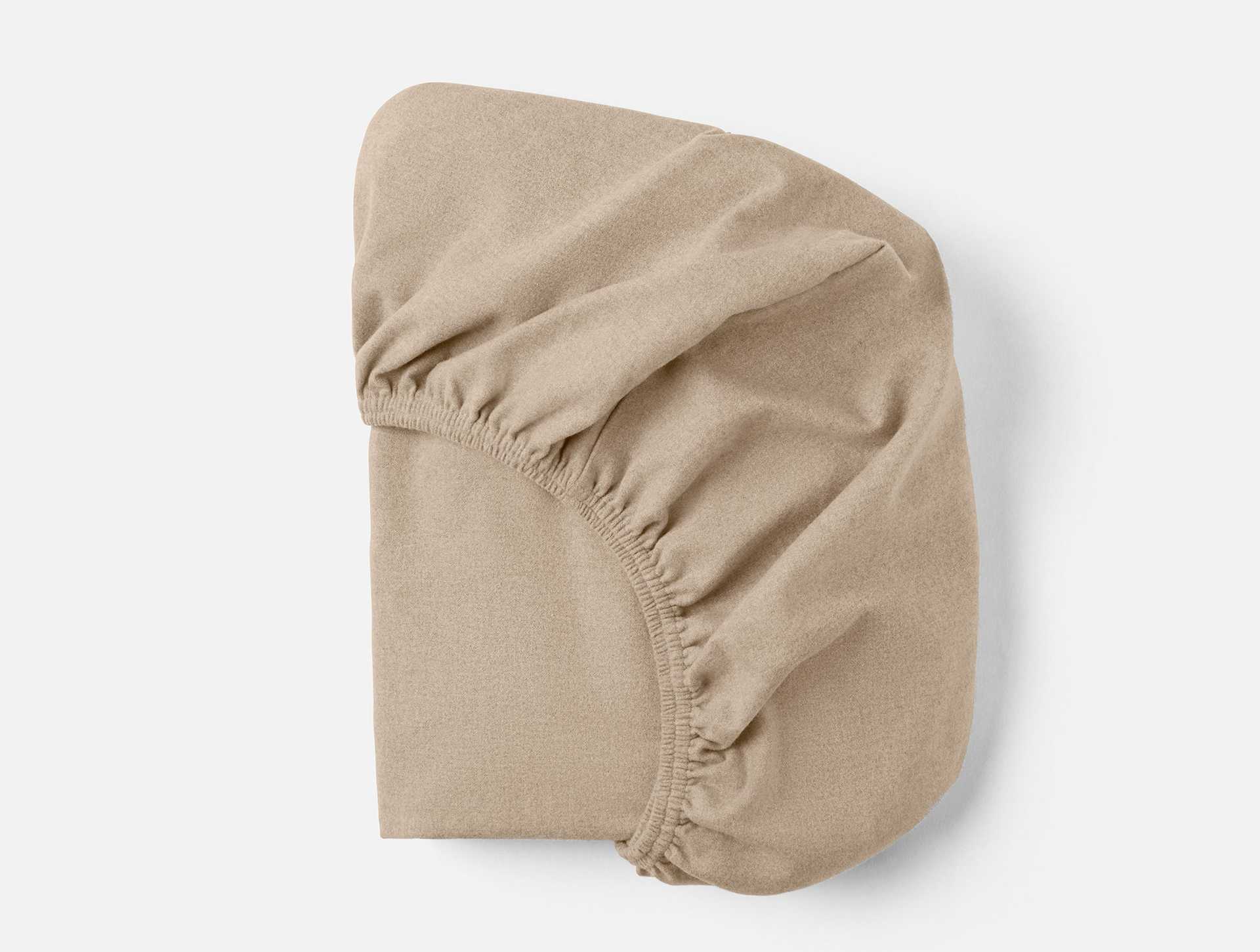
Alpaca is only one path through the bedding aisle. Cotton, wool, and blends offer different balances of texture, warmth, weight, and care. Organic cotton flannel, for example, gets its soft, warm surface from brushed cotton rather than animal fiber. A crib sheet such as the Cloud Brushed™ Organic Flannel Crib Sheet is designed for a specific fitted-sheet purpose, with dimensions and construction intended for a crib mattress. It is not a throw, but it demonstrates why comparing products by “softness” alone can be misleading: intended use and construction matter just as much as material.
Wool-filled bedding offers another kind of warmth, often in a quilted format, while cotton knits may be easier to wash at home depending on their labels. A blend can combine characteristics of multiple fibers, though composition alone does not establish how a textile will feel or perform. When comparing, look for the percentage of each fiber, the type of construction, the dimensions, the care instructions, and any certifications that are relevant to the particular claim being made.
Certifications can help answer questions about specified production standards, but they do not settle every question about comfort or maintenance. Nor does a claim such as “hypoallergenic” mean that a product cannot irritate any individual. Sensitivities differ; people with a history of reactions should seek appropriate advice and assess materials cautiously. The goal is to interpret labels as evidence about particular attributes, rather than as a general guarantee of safety or suitability.
The verdict: a layer with a defined role
The Lima Reversible Alpaca Throw is easiest to evaluate when its appeal is made concrete. It is a 50-by-70-inch knitted layer made from 100% baby alpaca, with a reversible design and decorative finishing at the edges. Its described warmth is lightweight rather than imposing. Those attributes point toward a throw for adult use: something to keep near a sofa, fold at the foot of a bed, or bring into a room when a little extra warmth is welcome.
Its strongest practical question is care. Dry cleaning only may be entirely acceptable for a piece used occasionally and handled with care. It may be a poor match for someone who wants a blanket that can be washed at home after frequent spills. Its size also calls for realistic expectations: useful as a personal layer, but not a replacement for bedding sized to cover a mattress.
There is no need to turn a throw into a referendum on taste. The decision is simpler and more personal. Does the fiber feel right to you? Does the size fit the surface and the way you intend to use it? Does the care routine seem sustainable over time? If the answers align, reversibility becomes a pleasant bonus rather than the main argument. A well-chosen layer should not merely look inviting on the first day; it should make sense on the ordinary evenings that follow.
Frequently asked questions
What are the dimensions of the Coyuchi Lima Reversible Alpaca Throw?
The listed dimensions are 50 by 70 inches. This is a throw-size layer suitable for personal use or as an accent across a bed or sofa, rather than a fitted sheet or full-coverage bed blanket.
What is the throw made from?
The product description lists 100% baby alpaca. “Baby alpaca” refers to a fiber grade, not necessarily fiber taken from a young animal. Check the current label for the precise composition and any updated product information.
How should an alpaca throw be cleaned?
The listed care for the Lima throw is dry clean only. Follow the sewn-in label and current manufacturer instructions rather than applying care advice from a different alpaca garment.
Can an alpaca throw be used in an infant’s crib?
No. Do not place a loose throw in an infant’s sleep space. Keep infant sleep areas clear of loose bedding and follow current safe-sleep recommendations from trusted health authorities.